You work hard to build your super and investments savings over many years. So, it's important every measure is taken to protect it. Especially today, as scams are more sophisticated and harder to spot. Learn about common super and investment scams, how you can spot the warning signs, and how to protect yourself and the people you care about.
Think you may have been affected by a fraud or scam?
Take action now.
What is account fraud?
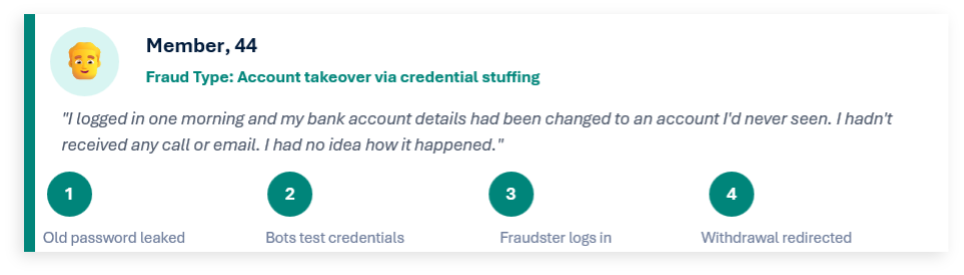
Account Fraud happens when someone accesses your account without your permission, often without you knowing. The person may work alone, and use stolen login details or personal information that was exposed in a data breach.
This type of fraud usually happens behind the scenes, so you may not realise it’s happened. Common examples include:
- Account takeover: Someone hacks into your account using stolen login details and makes changes or transactions without you knowing.
- Identity fraud using stolen personal information: Someone uses your personal information, which may have been bought from the dark web, to access or act on your superannuation account.
- Bank account redirection: Someone changes your payments details without your permission, so your money is sent to a different bank account.
- SIM swap to intercept security codes: Someone takes control of your mobile number so they can receive your one-time security codes and access your account without you knowing.
- Unexpected login alert: You get a security code or login alert you didn’t request. This could mean someone’s trying to get into your account.
- Bank details changed without your permission: Your nominated bank account has been updated, but you did not request or authorise the change. This may be a warning sign of fraud.
- Unexplained drop in your balance: Your super balance has gone down, even though you haven’t made a withdrawal, switched accounts, or changed your insurance.
- Mobile phone suddenly stops working: Your phone loses service without warning. This could be a sign someone’s taken over your mobile number to receive your security codes.
- Password reset email you didn’t ask for: You received an MLC password reset email, but you didn’t request it. Act quickly if this happens, as someone may be trying to access your account.
Example: Fraud often happens without your knowledge – criminals act in the background using stolen details.
What is a scam?
A scam is when someone tricks you into doing something, like sharing your login details, transferring your super, or moving your money into a fake self-managed super fund (SMSF). Scammers use pressure, fake stories, and other tricks to gain your trust and manipulate you into getting what they want.
Be aware of these common scams:
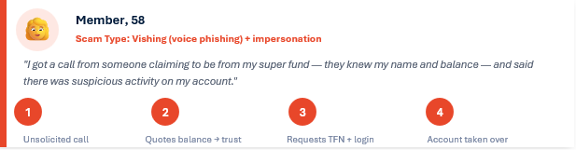
- Fake phone calls (voice phishing): Someone calls pretending to be from a company you know, the ATO, or another government body such as ASIC and pressures you to act quickly.
- SMSF scam: Someone claiming to be a financial adviser promises high returns and convinces you to move your super into a new SMSF.
- Phishing emails or text messages: You receive a message that looks real and asks you to click a link, log in or confirm personal details.
- Early access scam: Someone offers to help you access your super before you are legally allowed to, often for a fee.
- Unexpected contact about your super: You receive an unexpected call, email or text message about your super from someone claiming to be a company you know, the ATO, or ASIC, even though you did not contact them first.
- Pressure to act fast: You're told to act immediately or you could lose money, miss out on a tax refund, or lose access to your account.
- Promises of high returns: Someone claiming to be an 'adviser' or platform promises high returns - often 10–30% above market rates — with little or no risk.
- Suspicious links or login pages: An email or text message asks you to click a link to a log in. The web address doesn’t match "www.onepathsuperinvest.com.au" exactly or uses a lookalike domain.
- Request to set up a new SMSF: Someone contacts you unexpectedly and encourages you to move your super into a new SMSF that they will 'manage' for you.
Example: Scammers often follow a pattern. Here’s a real example showing how a phone scam can escalate.
Real-world examples: how fraud and scams happen
These case studies are based on real situations that most commonly affect our members. They show how fraud and scams can happen and the warning signs to look out for.
FRAUD
What happened
- Sam’s personal information was exposed in a data breach, including his name, date of birth, address, and contact information.
- At first, everything seemed normal.
- Weeks later, a fraudster used the information to pretend to be Sam and contacted his super fund.
- The fraudster passed the identity checks, updated the contact details on the account and requested access changes.
What happened next
- After gaining access to the account, the fraudsters submitted a withdrawal request.
- Account notifications were redirected to contact details controlled by the fraudster.
- Sam only discovered the fraud when he checked his account and noticed a large drop in his account.
How to protect yourself
- Act quickly if your information’s involved in a data breach.
- Change the passwords for your email and financial accounts.
- Turn on multi-factor authentication (MFA).
- Check your super or pension account regularly.
- Contact your provider if you stop getting important account communication.
- Ask about extra security options that may be available on your account.
SCAM
What happened
- Tom received an email that appeared to be from his financial adviser asking him to transfer money.
- The email looked genuine, so Tom made the payment.
What happened next
- Tom later found out that the email was fake.
- The money had been sent to a scammer instead of his adviser.
How to protect yourself
- Always check unexpected payment requests using a trusted contact method.
- Check the sender’s email address carefully to make sure it’s known to you. Be cautious if you’re being pressured to move fast.
- Look for small changes in email addresses or website links.
- Contact your bank or super fund immediately if unsure.
SCAM
What happened
- Mr X, aged over 65, was contacted by someone he believed was a friend needing financial help.
- The request later escalated into a cryptocurrency investment opportunity with high returns and no risks.
- Mr X made multiple transfers and withdrawals, ignoring repeated bank warnings.
What happened next
- Communication eventually stopped and Mr X lost approximately $860,000.
How to protect yourself
- Be cautious when requests for help escalate into investment opportunities.
- Be wary of cryptocurrency-related investments.
- Take bank warnings seriously.
- Seek independent advice before moving money.
SCAM
What happened
- Mary was contacted about investing in cryptocurrency and encouraged to set up an SMSF.
- She was instructed to open multiple bank accounts and move funds into crypto platforms.
- Cryptocurrency placed into her wallet was quickly removed by unknown parties.
What happened next
- Red flags identified during a financial advice appointment indicated scam activity and possible money laundering.
How to protect yourself
- Be wary of unsolicited cryptocurrency investment offers.
- Never move money for someone else.
- Do not keep financial activity secret.
- Seek independent advice before setting up an SMSF.
SCAM
What happened
- Beth formed an online relationship through a dating app
- The relationship discussed topics of her financial position and involved discussions about investing.
- She was encouraged to invest in cryptocurrency and pay fees.
- She was asked to keep the investment secret.
What happened next
- After paying multiple fees, communication stopped and Beth lost over $155,000.
How to protect yourself
- Be cautious if online relationships involve money.
- Do not keep financial matters secret.
- Be wary of fees to access or recover funds.
- Seek independent advice before investing.
SCAM
What happened
- Steve was introduced by word of mouth to an adviser named Sam
- Unknown to Steve, Sam is not a licensed adviser
- Sam explained to Steve ways to access super while not meeting a condition of release
What happened next
- Steve agreed to pay Sam a 10% fee to request a withdrawal from his super
- Sam obtained ID documents & signed blank forms from Steve opening up id theft risks
- Steve ultimately paid $35000 to withdraw $350000 from super
How to protect yourself
- Check the adviser if they are licensed via moneysmart
- If you are unsure about advice recommendations, seek a 2nd opinion
- Contact your bank or super fund immediately if unsure.
What happened
John was looking for ways to improve his financial knowledge and enrolled in an online investment trading course. Shortly afterwards, he began receiving unsolicited contact from individuals claiming to represent legitimate investment organisations and offering assistance to grow his wealth.
One of these parties advised that a substantial payment of approximately USD $32,000 was available to be transferred to him as part of an investment opportunity. The representatives appeared professional and persuasive, and continued to engage with him through various communication channels.
As discussions progressed, several warning signs emerged. The investment platform involved appeared questionable, the explanations provided were unclear, and the promises being made seemed too good to be true.
What happened next
Before taking any further action, the member contacted us to discuss the situation.
After reviewing the information provided, we encouraged the member to:
- Stop communicating with the third parties immediately.
- Seek guidance from their licensed financial adviser.
- Contact their bank if any personal or financial information had been shared.
- Report the matter to the relevant authorities.
The member followed this advice and ceased all contact with the parties involved. After obtaining independent advice, they decided not to proceed with the investment opportunity.
The outcome
Because the member took the time to seek advice and verify the situation before acting, they avoided potentially significant financial loss.
By recognising the warning signs and consulting trusted sources, the member was able to protect both their money and personal information.
Red flags to watch for
- Unsolicited contact about investment opportunities.
- Promises of high returns with little or no risk.
- Pressure to act quickly or keep discussions confidential.
- Difficulty verifying the company or investment platform independently.
- Requests to transfer money or share personal information with unfamiliar parties.
Key takeaway
Scammers often rely on urgency, trust and promises of easy financial gains. Taking a moment to pause, verify information independently and seek professional advice can help you avoid becoming a victim of an investment scam.
What to do if you think you’ve been a victim of fraud or scam
If you think you've been targeted by a scam, it’s important to act quickly. Scams can happen to anyone, and the information below explains what to do next. take these steps right away.
- Stop all contact Do not send money, share more information, or reply to further calls, emails or messages.
- Secure your accounts
- Change your passwords, especially email and financial accounts
- Turn on multi factor authentication (MFA) if available.
- If you think your device’s been affected, use a different device to update your account details.
- Contact us as soon as possible Report the incident to us on 133 665 — even if you’re not sure what’s happened or no money has been lost yet. Acting quickly can help prevent further loss.
Reporting and support:
- Contact your super fund Contact us so we can investigate the issue and help protect your account.
- Report the matter to police You can also report the scam or fraud to your local police. Please note that reporting the matter to us does not automatically create a police report.
(If money has been lost, contact your bank immediately)
Where to get more help
If you’re looking for extra support or advice, these organisations offer free and independent help.
IDCARE
Help for people whose personal identity information has been stolen or exposed.
MoneySmart (ASIC)
Guidance on scams, super and protecting your money.
Scamwatch (ACCC)
Information about current scams and how to report them.
Australian Cyber Security Centre (ACSC)
Advice on cyber threats, malware and securing your devices.
Office of the Australian Information Commissioner (OAIC)
Information on data breaches, privacy rights and complaints.
Australian Taxation Office (ATO)
Support and warnings about superannuation and SMSF scams.

Protecting your super and investment online
Learn moreThink you may be facing a scam or have been a victim of fraud?
If you think you've been targeted by a scam or have experienced fraud, call us on 133 665 between 8.30am and 6.30pm AEST/AEDT, Monday to Friday.